
The Constellation of Grief Transformed into Cosmic Sound
The Little PrinceMaps the narrator's shift from sorrowful emptiness to hearing the stars as five hundred million little bells, making absence a form of presence.
increasing Bearing strength in each event
 decreasing
Bearing strength in each eventdecreasingHeavy Heart

Heavy Heart
Context
The narrator's early state is one of sadness. He has seen the Little Prince appear and disappear, and the memory weighs on him. He hides the weight behind the word "tired."
Development
The heaviness is not physical exhaustion but emotional grief. The desert has left him with a story he cannot yet tell. The stars have not yet become bells; they are just distant lights.
Significance
The heavy heart is the raw material that grief will later transfigure into beauty. It establishes the initial condition of loss.
Nightly Listening
Nightly Listening
Context
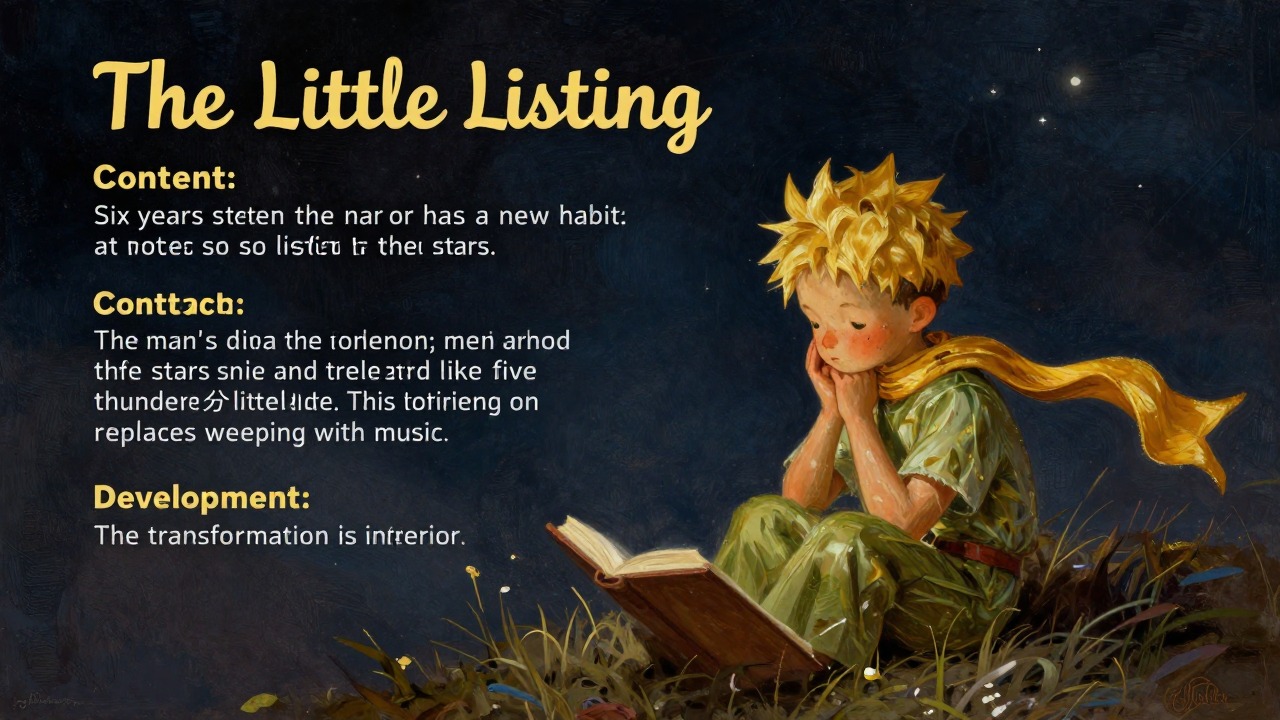
Six years later, the narrator has a new habit: at night he loves to listen to the stars. The stars are not silent; they sound like five hundred million little bells. This listening replaces weeping with music.
Development
The transformation is interior. The narrator no longer sees the sky as an unmoving map but as a chime of voices. Each bell seems to carry some trace of the Little Prince's laughter.
Significance
Nightly listening marks the transformation of grief into aesthetic pleasure. The universe becomes a companion in loneliness.
Bells of Joy
Bells of Joy
Context
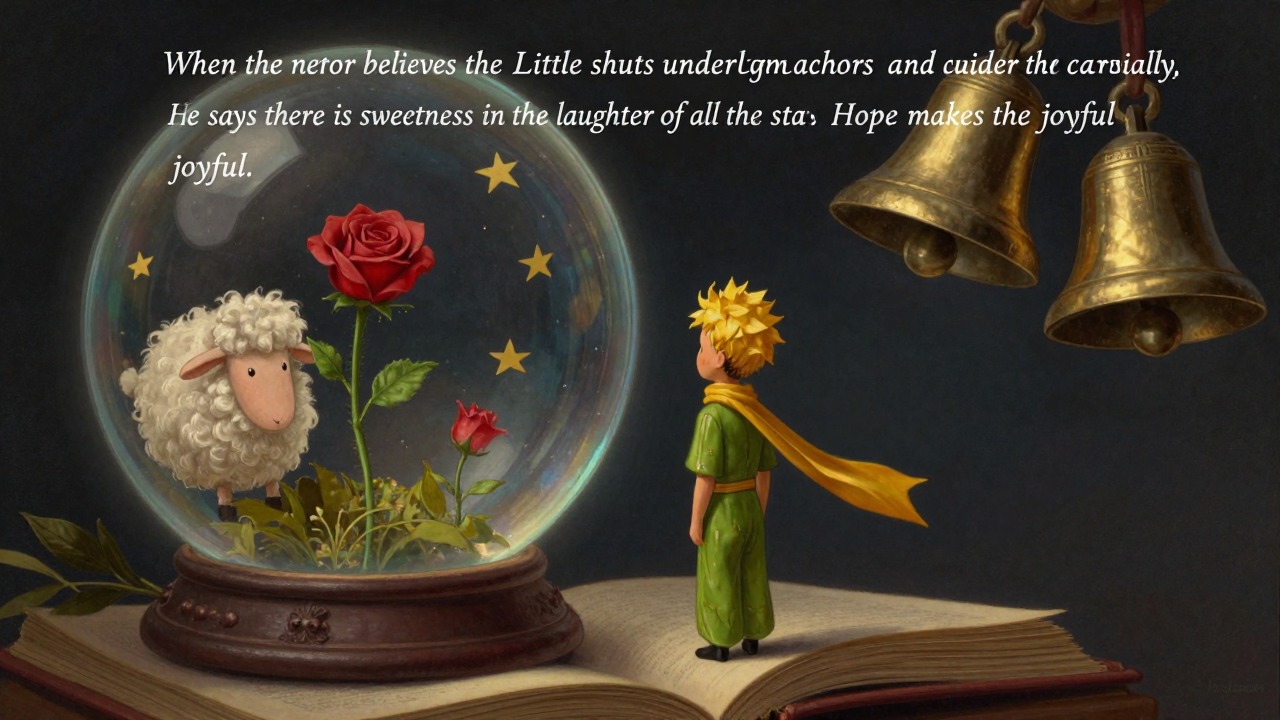
When the narrator believes the Little Prince shuts the Rose under her glass globe and watches the Sheep carefully, he says there is sweetness in the laughter of all the stars. Hope makes the bells joyful.
Development
The bells are not constant; they change with the narrator's mood. The same stars that ring at night can laugh sweetly when the prince seems safe. Sound carries emotional weather.
Significance
Bells of joy prove that grief has not become permanent despair. The narrator has found a way to hear happiness in absence.
Bells Turned to Tears
Bells Turned to Tears
Context
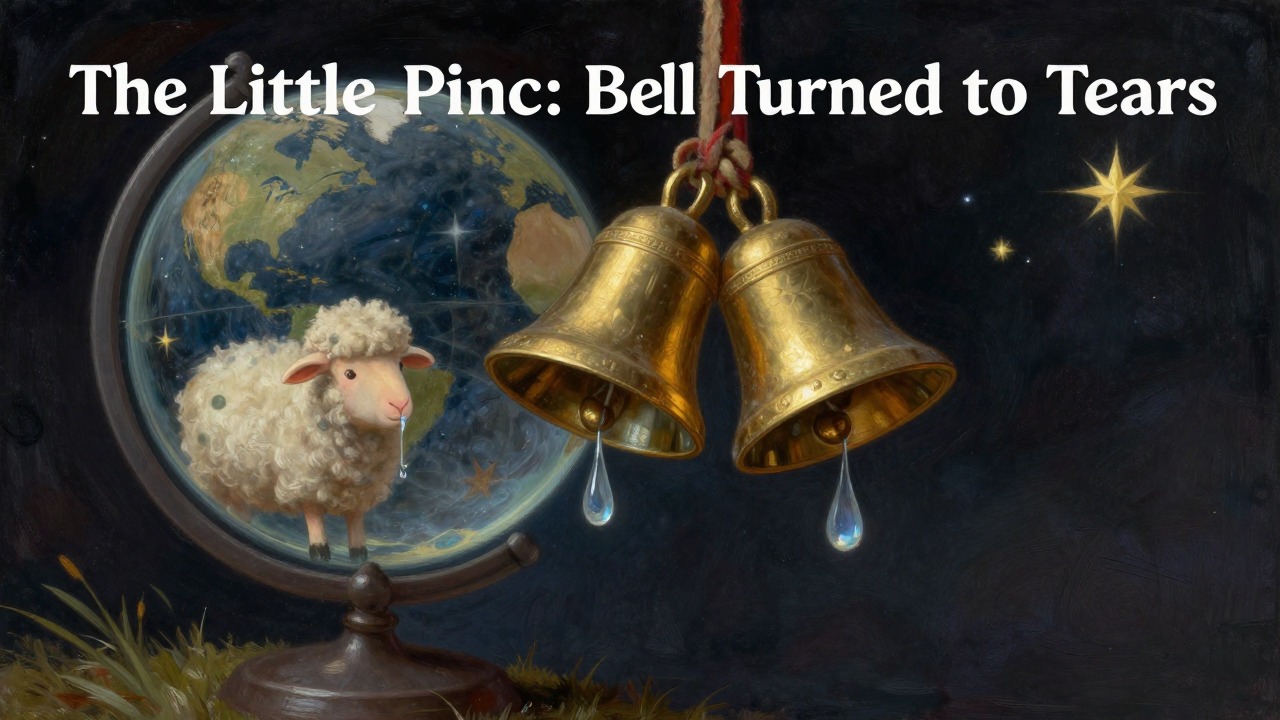
In the opposite scenario—a forgotten glass globe, a sheep that slips out—the little bells are changed to tears. The same stars that were sweet now weep.
Development
The image is deliberately exact: the bells do not disappear, they turn into tears. Sound becomes liquid grief. The narrator's cosmic consolation is reversible, held in balance by anxiety.
Significance
The tears in the bells show that healing is incomplete. The narrator can transform grief momentarily, but the uncertainty of the Rose can plunge him back into sorrow.
Star Gazing as Prayer
Star Gazing as Prayer
Context
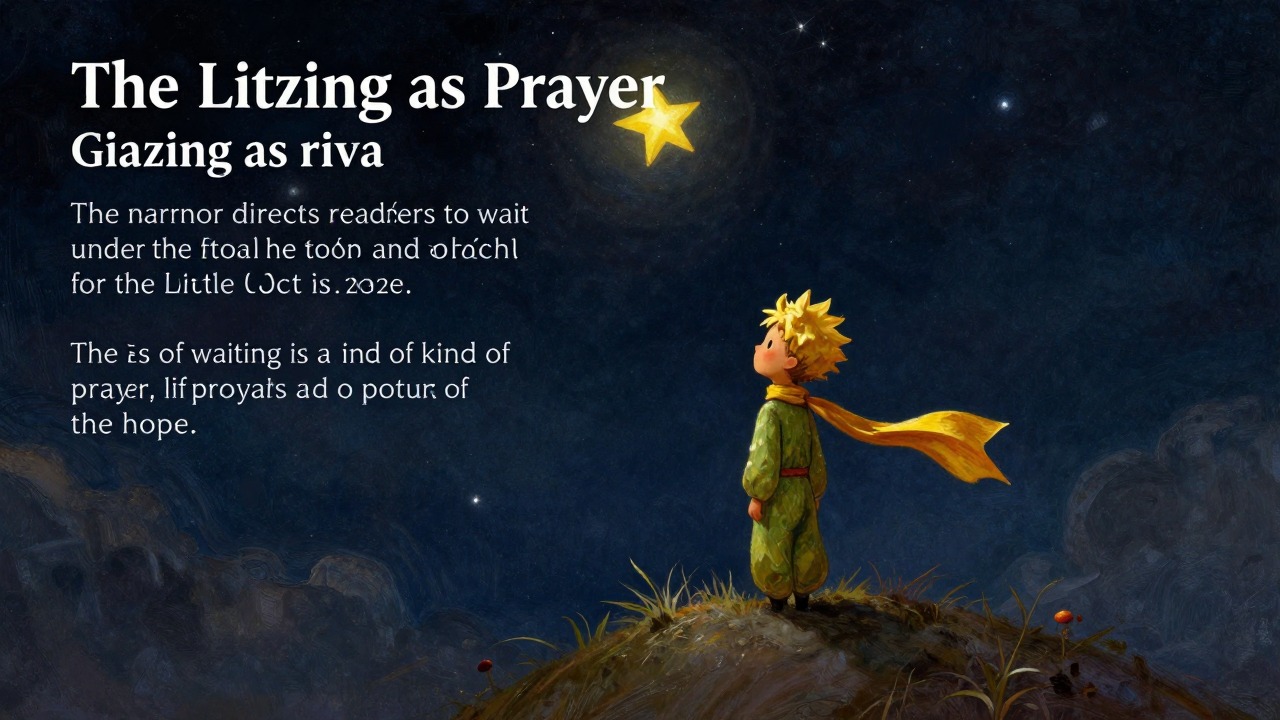
The narrator directs readers to wait under the star and watch for the Little Prince. The act of waiting is a kind of prayer, a posture of hope.
Development
The star is no longer a random celestial object; it is linked to the prince's appearance. Standing under it, looking up, one participates in the narrator's longing. The bells and tears have become a liturgy.
Significance
Star gazing as prayer turns the whole epilogue into an act of worship. The absent prince is honored by every person who stops under the star and believes in return.
when the narrator first returned from the African desert
at night, six years later, when the narrator listens to the stars
when the narrator feels certain the Rose is safe
when the narrator fears the Sheep has eaten the Rose
at the narrative's close, under the star
